

Hardwiring a Dash Cam vs Using a Cigarette Lighter: The Ultimate 2026 Power Guide
Bleat
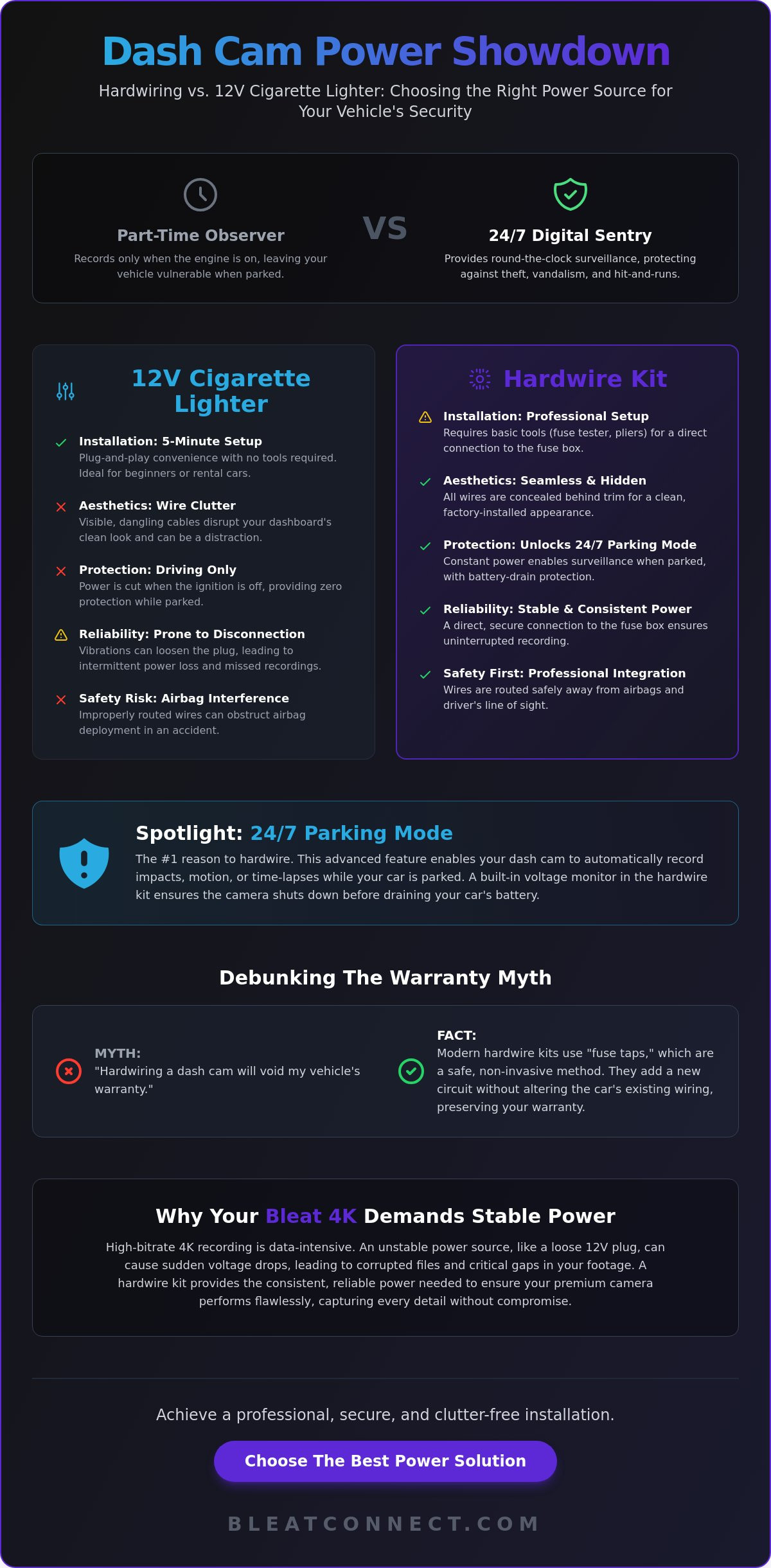
The standard 12V cigarette lighter is the biggest bottleneck currently holding back your vehicle's security. While it offers immediate power, it leaves your dashboard cluttered with wires and your car vulnerable once the engine stops. When evaluating hardwiring a dash cam vs using cigarette lighter power, you aren't just choosing a cable; you're deciding if your camera is a part-time observer or a 24/7 digital sentry.
It's frustrating to deal with dangling cords or the constant worry about car battery drainage. You deserve a setup that matches the sophisticated tech of your Bleat 4k dashcamera. This guide provides the technical insights and installation secrets to help you choose the perfect power source for your lifestyle. We will explore how to achieve a wire-free aesthetic, the mechanics of Parking Mode, and the latest 2026 windshield placement regulations. Discover how to transform your vehicle into a secure, connected hub with reliable power that never misses a critical moment.
Key Takeaways
- Compare the trade-offs of hardwiring a dash cam vs using cigarette lighter to determine which power source fits your security needs.
- Discover how to eliminate clutter and achieve a clean, wire-free dashboard for an upgraded cabin aesthetic.
- Learn how hardwiring unlocks 24/7 Parking Mode to protect your vehicle from hit-and-runs while you're away.
- See why high-performance Bleat 4k car dashcamera systems benefit from the stable power delivery of a dedicated fuse box connection.
- Debunk common myths about vehicle warranties and learn how modern fuse taps provide a safe, non-invasive installation.
Powering Your Protection: The Basics of Dash Cam Installation
Your vehicle's electrical architecture is the foundation of your mobile security. Choosing between hardwiring a dash cam vs using cigarette lighter power isn't just about convenience; it's about system reliability. Most drivers start with the path of least resistance. However, your vehicle's "entry-state"—whether it has an accessible 12V port or a complex modern fuse box—dictates your installation trajectory. If you've invested in a high-performance Bleat 4k car dashcamera, power stability is non-negotiable. High-bitrate 4K recording demands consistent voltage to maintain data integrity. Any sudden drop in current can lead to corrupted files or critical gaps in your timeline.
Understanding your Dash Cam Power Options is the first step toward a professional setup. While both methods provide the energy needed to record your drive, they offer vastly different levels of protection. Hardwiring creates a seamless, integrated experience that mirrors factory-installed tech. Using the cigarette lighter is often a temporary bridge. For those seeking a permanent lifestyle upgrade, the choice usually leans toward the fuse box.
The 12V Socket (Cigarette Lighter) Explained
The 12V accessory socket is the classic plug-and-play solution. A standard adapter converts your car's DC output into the specific voltage your camera requires. Most modern vehicles utilize "Switched Power" for this port. This means the camera draws energy only when the ignition is active. While this prevents battery drain, it also means your surveillance stops the moment you park. The physical limitation is the trailing cable; it often hangs across the dashboard, creating a cluttered aesthetic that disrupts the clean lines of a modern interior.
The Hardwire Kit: A Direct Line to Security
A hardwire kit is a sophisticated bridge to your vehicle's brain. It uses fuse taps to draw power directly from the fuse box, hiding all wires behind the interior trim. This setup utilizes two primary leads: the ACC (switched) lead and the Constant (unswitched) lead. When comparing hardwiring a dash cam vs using cigarette lighter power, the biggest advantage is the Constant lead. It enables your Bleat 4k car dashcamera to stay alert while the engine is off. This kit includes a voltage regulator to protect your car battery, ensuring the camera shuts down before the vehicle's starting power is compromised.
Essential Tools for Modern Installation:
- 12V Path: No tools required; immediate plug-and-play.
- Hardwire Path: Circuit tester or multimeter; trim removal tool; pliers; and a Bleat hard wire KIT.
The 12V Cigarette Lighter Socket: Convenience vs. Limitation
The "Five-Minute Setup" is the primary draw for the 12V accessory socket. It's the go-to choice for beginners who want immediate results without touching a fuse box. You simply plug the adapter into the socket, route the wire loosely around the trim, and your camera starts recording. This plug-and-play nature offers unmatched portability. If you frequently switch between multiple vehicles or rely on rental cars for travel, the 12V method ensures your Bleat 3k car dashcamera remains a versatile companion rather than a permanent fixture.
However, this convenience comes with a hidden operational cost. Most modern vehicles provide only one or two accessible power ports. By occupying the cigarette lighter with a dash cam, you lose the ability to charge your smartphone or power other essential cabin tech. Reliability is another significant hurdle. These sockets were originally designed for heating elements, not for high-vibration, continuous electronic data transfer. Over time, road vibrations can cause the plug to shift slightly. A loose connection might result in intermittent power resets, leaving you without footage at the exact moment an accident occurs.
The Aesthetic and Safety Trade-off
The "Wire Clutter" problem is more than just a visual nuisance. When you choose the 12V path, managing the excess cable often leads to wires dangling across the dashboard or near the rearview mirror. This can severely impact driver visibility and distract from the road. More critically, poor cable routing poses a genuine safety risk. If wires are draped across the A-pillar or passenger-side dashboard, they may interfere with the deployment of side-curtain airbags. This lack of integration is the #1 deterrent for premium car owners who want to maintain a factory-fresh interior. Effective January 1, 2026, updated California regulations also mandate strict placement rules for dash cams to ensure they don't obstruct the driver's line of sight, making a clean installation even more vital.
Functional Gaps in Entry-Level Power
The technical debate of hardwiring a dash cam vs using cigarette lighter power centers on functionality. Most 12V sockets are "switched," meaning they cut power the moment you turn off the engine. This limitation makes advanced Parking Mode features impossible to use. Without a constant power source, your vehicle is left unprotected against hit-and-runs or vandalism in parking lots. Furthermore, 12V adapters lack the sophisticated power management found in hardwire kits. An "instant-off" scenario can occasionally prevent the camera from properly closing the final video file, leading to data corruption. For those running dual-channel setups with both front and rear cameras, the power draw may push a standard 12V adapter to its thermal limits, potentially causing hardware instability during long summer drives.
Hardwiring for 24/7 Security: Unlocking Advanced Parking Mode
Security shouldn't sleep just because your engine does. The fundamental difference in hardwiring a dash cam vs using cigarette lighter power is the ability to maintain a vigilant watch over your asset 24/7. While a standard plug-and-play setup leaves your car blind the moment you park, a hardwired connection turns your Bleat 4k car dashcamera into a dedicated sentry. This constant power feed is the only way to unlock advanced Parking Mode features. It allows the camera's G-sensor and motion detection sensors to remain active, capturing hit-and-runs or vandalism that occur while you're away from the vehicle.
Beyond security, hardwiring delivers a premium, factory-installed aesthetic. You can tuck wires behind the A-pillar and headliner, creating a seamless look that modern luxury vehicles demand. This eliminates the unsightly "wire sag" that plagues entry-level installations. Additionally, moving your power source to the fuse box frees up your 12V socket. You can now use that port for other travel essentials without having to choose between a charged phone and a working camera. It's a lifestyle upgrade that prioritizes both functionality and cabin design.
The Science of Low-Voltage Protection
A common concern with constant power is the fear of a dead battery. Smart hardwire kits solve this through integrated low-voltage protection. These kits act as a digital gatekeeper, constantly monitoring your car battery's health. Most vehicle batteries sit at roughly 12.6V when healthy. A quality hardwire kit allows you to set an automatic cutoff threshold, typically between 11.8V and 12.4V. Once the battery hits this limit, the kit severs power to the camera. This ensures your car always has enough "cranking amps" to start the next morning. Bleat kits utilize advanced sensors to balance high-security surveillance with long-term battery longevity, providing peace of mind without the risk of being stranded.
Professional Integration and Longevity
Hardwiring is the superior choice for high-heat environments and long-term hardware health. Standard 12V adapters often generate significant heat at the socket, which can lead to thermal throttling or hardware resets during summer months. In contrast, a hardwired setup distributes the electrical load more efficiently through the vehicle's existing fuse architecture. By hiding the cables behind interior panels, you also protect the wiring from UV damage and physical wear. This "hidden" installation isn't just about looks; it's about building a robust security ecosystem that survives the rigors of daily driving and extreme weather conditions.
The Verdict: Technical Showdown and Addressing Warranty Myths
The technical showdown between hardwiring a dash cam vs using cigarette lighter power comes down to your tolerance for compromise. While the 12V socket is almost instant and costs nothing extra, it limits your hardware to a part-time role. Hardwiring requires a small investment in a kit, typically ranging from $20 to $70, and roughly 45 minutes of setup time. However, it unlocks the full potential of your device. A clean, hidden installation also preserves your vehicle's interior integrity. This is a subtle selling point for future buyers looking for a tech-ready car with a professional finish.
Modern hardwire kits have solved the "battery drain" horror stories of the past. Older methods involved tapping directly into wires, which could lead to parasitic draws. Today's kits use intelligent voltage monitoring to cut power before your battery dips below starting levels. This makes the security benefits of hardwiring far outweigh the minimal risk to your vehicle's electrical health. You gain a permanent protector without sacrificing the ability to start your car the next morning.
The Warranty and Safety Reality
Many drivers hesitate to hardwire because they fear voiding their vehicle warranty. This is a common misconception based on outdated installation practices. Modern setups use "plug-and-play" fuse taps that require zero wire cutting or splicing. You simply slot the tap into an existing fuse spot. This makes the entire process completely reversible. It's an ideal solution for leased vehicles where you must return the car in its original condition. Fuse taps act as an independent circuit to protect the car.
Which Method Fits Your Driving Profile?
Your choice should align with your specific environmental risks and hardware expectations. No single method fits every driver, but the following profiles help simplify the decision:
- The Casual Commuter: If you only drive during daylight and park in a secure, private garage, the 12V socket provides adequate coverage for active driving incidents.
- The Urban Protector: For those who park on public streets or in busy commercial lots, hardwiring is non-negotiable. You need 24/7 surveillance to catch hit-and-runs while you're away.
- The Tech Enthusiast: If you've invested in a Bleat 4k car dashcamera, you want the highest bitrate and most stable power delivery possible. Hardwiring ensures your 4K sensors receive the consistent voltage they need for crystal-clear data processing without interruption.
Quick Comparison:
- Installation Time: 12V (5 Mins) | Hardwire (45-60 Mins)
- Parking Mode: 12V (No) | Hardwire (Yes)
- Cable Visibility: 12V (High) | Hardwire (Zero)
- Socket Availability: 12V (Occupied) | Hardwire (Free)
Why Bleat 4K Hardware Demands a Premium Power Solution
Recording in true Ultra HD is a resource-intensive process. A Bleat 4k car dashcamera processes four times the data of a standard 1080p model, requiring significantly more energy for real-time image processing and data writing. This high-bitrate recording demands a consistent, high-amperage power supply that standard 12V adapters often fail to provide over long durations. When comparing hardwiring a dash cam vs using cigarette lighter power, the technical requirements of 4K sensors make the choice clear. Fluctuations in current can lead to frame drops or thermal throttling, compromising your evidence. Bleat's proprietary power management is specifically engineered to handle these loads, ensuring your device operates at peak performance without interruption.
Optimizing for Indian road conditions means accounting for extreme ambient heat and frequent engine start-stop cycles. Our hardware is built to withstand these variables. By choosing a dedicated power line through the fuse box, you ensure that the sophisticated sensors in your Bleat 4k car dashcamera have the electrical headroom they need. This synergy between hardware and power delivery is what separates a basic gadget from a professional-grade security system. It's the difference between a device that occasionally records and one that provides an unbreakable chain of evidence.
Engineered for Protection
Bleat hardware is designed to manage the sudden voltage spikes that occur during ignition. Using original Bleat accessories, like the Bleat hard wire KIT, provides the thermal stability necessary for continuous 4K processing. This setup prevents power lag, ensuring your loop recording never misses a single second of the journey. In high-heat environments, the efficiency of a hardwired connection reduces the risk of the camera shutting down due to overheating, which is a common failure point for 12V plug-in models that struggle with heat dissipation.
Seamless Connectivity with the Bleat Ecosystem
A hardwired setup integrates perfectly with the Bleat smartphone app. You can manage your power settings, check battery voltage levels, and calibrate parking mode sensitivity directly from your phone. This level of control allows you to maximize surveillance efficiency without risking your vehicle's battery health. It's time to move beyond temporary fixes and embrace a permanent security solution for your modern lifestyle. Upgrade your vehicle security with the Bleat 4K Dash Cam and Hardwire Kit today to experience the future of connected driving and total peace of mind.
Elevate Your Vehicle's Digital Security
The choice between hardwiring a dash cam vs using cigarette lighter power defines the boundary between basic recording and total vehicle protection. While a 12V adapter serves as a functional entry point, hardwiring is the essential upgrade for those who prioritize a clean aesthetic and 24/7 vigilance. You've learned how a direct fuse box connection unlocks Parking Mode, protects your battery with smart voltage cutoffs, and eliminates dangerous wire clutter. This professional setup isn't just about power; it's about reliability in the moments that matter most.
Your journey deserves the clarity of innovative 4K resolution hardware and market-leading power management. These systems are specifically designed for the modern traveler who demands seamless integration and high-performance data integrity. Don't settle for dangling cords or missed footage when your engine is off. Take the final step toward a smarter, more connected driving experience today. Secure your journey with the Bleat 4K Car Dashcamera and drive with the authoritative confidence of a market leader. Your car is ready for its digital upgrade.
Frequently Asked Questions
Will hardwiring my dash cam drain my car battery?
Modern hardwire kits won't drain your battery to the point of failure. These kits feature integrated low-voltage protection that monitors your vehicle's electrical levels in real time. Once the battery reaches a specific threshold, typically between 11.8V and 12.4V, the system automatically severs power to the camera. This ensures your vehicle always retains enough cranking amps to start the engine, even after a weekend of parking surveillance.
Can I hardwire a dash cam myself or do I need a professional?
You can complete a DIY installation if you're comfortable accessing your vehicle's fuse box and using basic tools like a circuit tester. The process involves identifying a constant power source and a switched power source using fuse taps. If you're unfamiliar with automotive electrical systems or own a high-end luxury vehicle with complex wiring, you should check with a local specialist to ensure the setup meets your specific car's requirements.
Does using the cigarette lighter socket affect video quality?
The socket doesn't change the camera's resolution, but it can jeopardize data integrity. High-performance devices like the Bleat 4k car dashcamera require a stable, high-bitrate power supply. Loose connections in a 12V socket can cause micro-resets or voltage drops during recording. These interruptions often lead to corrupted video files or gaps in your footage, which is a risk you avoid by choosing a dedicated fuse box connection.
Is it illegal to have wires hanging from my dash cam?
Hanging wires can lead to legal issues if they obstruct your field of vision. Laws in all 50 U.S. states mandate that drivers maintain a clear view of the road. Effective January 2026, California specifically updated its placement regulations to ensure devices don't interfere with safe operation. Hardwiring is the most effective way to comply with these safety standards while maintaining a professional cabin aesthetic.
What is the difference between a hardwire kit and a USB cable?
A USB cable is a simple power conduit that usually only works when the engine is running. In contrast, a hardwire kit is a sophisticated power management tool that connects directly to your car's electrical brain. When comparing hardwiring a dash cam vs using cigarette lighter USB cables, the hardwire kit is the only option that supports 24/7 Parking Mode by drawing energy from unswitched fuses.
Will hardwiring my dash cam void my car insurance or warranty?
Standard hardwiring using non-invasive fuse taps doesn't void your warranty. These taps allow you to add a circuit without cutting or splicing any factory wires, making the installation completely reversible. Insurance companies often view dash cams favorably as they provide objective evidence during claims. Always use high-quality accessories like the Bleat hard wire KIT to ensure the installation remains safe and compliant with vehicle standards.
How long can a dash cam record in parking mode when hardwired?
Recording duration typically ranges from 12 to 48 hours depending on your car battery's health and your camera settings. Factors like the frequency of motion detection events and the specific voltage cutoff you select will influence the runtime. Bleat's advanced sensors are optimized for efficiency, allowing the system to remain in a low-power standby state until it detects a physical impact or nearby movement.
Does my car need to have a specific fuse type for hardwiring?
Yes, your vehicle uses one of four common fuse sizes: ATO, Mini, Low-Profile Mini, or Micro2. You must match the fuse tap in your hardwire kit to the specific standard used in your car's fuse box. You can identify your fuse type by checking your owner's manual or inspecting the fuse box cover. Ensuring a perfect match is critical for a secure electrical connection and long-term hardware reliability.